
"coffee supply crisis"
200 article(s) found

Kenyan coffee is highly competitive in the market, and the value chain analysis of coffee
1. Background Coffee is one of the most important agricultural products in international commodity trade. Historically, as early as the 1990s, coffee was the second largest internationally traded commodity after oil. However, due to the imbalance between coffee production, production and sales at different stages, the coffee industry has been in crisis more or less over the past decade. As a

Talk about Certification | ICO-- International Coffee Organization formulates the International Coffee Convention
125 million people around the world depend on coffee, and most of the coffee is produced by small coffee farmers, who farm so hard that the world consumes 600 billion cups of coffee a year. Large consumption makes coffee one of the widely traded commodities in the world. More than 60 countries mainly produce and trade coffee. These countries rely heavily on coffee exports. According to statistics, there are many countries.

The reshuffle of China's coffee shop industry is accelerating, and the market shock is far from over.
The exchange of professional baristas please follow that the shock of the coffee workshop (Wechat official account cafe_style) has increased, the shuffle has accelerated, and even the imitated Starbucks has returned to the same starting line as local cafe entrepreneurs. After the coffee shop start-up crisis has been going on for years, China's coffee shop business seems to have fallen short overnight. Statistics swoop on the roller coaster

Robusta Robusta
Robusta, one of the most important coffee tree varieties in the world. Robusta species (scientific name Coffee Robusta Linden). The leaf rust-resistant varieties found in Congo in Africa have stronger disease resistance than Arabica. In the general coffee market, many people like to compare robusta and Arabica coffee beans, which is incorrect. In fact, the Robusta progeny
Discussion on the Feasibility of Fair Trade in Yunnan Coffee
Fair trade is a non-traditional trade method that improves the living conditions of small-scale producers and provides opportunities for sustainable development for disadvantaged producers in a short period of time. In recent years, fair trade system has been gradually perfected, forming a fair trade policy based on producer and recognition.

Brazilian coffee bean grade characteristics and story Brazilian coffee bean import and export data
Professional coffee knowledge exchange more coffee bean information Please follow the coffee workshop (Wechat official account cafe_style) those who are familiar with Brazilian coffee must know that Brazil not only has high-quality fine coffee, but also is an indispensable basic bean in many blended coffees. The most important feature of Brazilian coffee is calm, so that people do not have to have too much burden on bitterness and sour taste, and the entrance is smooth.

Apocalypse of the rise of Myth: Starbucks Brand Defense and Market Intelligence
In 1971, the billboard at the airport read: the last person to leave Seattle, don't forget to turn off the lights. Boeing collapsed and the Great Recession enveloped Seattle. In the same year, the first Starbucks opened on the street corner. Starbucks listed on Nasdaq 21 years later, and has since maintained annual sales of 20% and profit growth of 30% a year. May not quite understand the wealth meaning of these numbers.
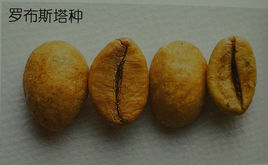
Introduction to coffee beans: learn more about Robusta coffee beans and the essence of tenacity
Robusta, one of the most important coffee tree varieties in the world. Robusta species (scientific name Coffee Robusta Linden). The leaf rust-resistant varieties found in Congo in Africa have stronger disease resistance than Arabica. In the general coffee market, many people like to compare robusta and Arabica coffee beans, which is incorrect. In fact, the Robusta progeny

Starbucks Analysis of Starbucks with knowledge of Cafe Management
In 2008, the financial crisis brought a wave of layoffs. A US website recently ranked Starbucks eighth in its 2008 list of US corporate layoffs with 600store closures and 12000 layoffs. In 2008, Starbucks closed its underperforming stores in the US. In January 2009, Starbucks spokesman DebTrevino announced that another 300 stores would be closed this year. According to 08

Is Mexican coffee sour or bitter? how to brew Mexican coffee will taste better.
For more information on coffee beans, please follow the coffee workshop (Wechat official account cafe_style) Coffee cultivation history in Mexico. Spanish settlers were the first people to bring coffee to Mexico in the 18th century, first growing coffee in the fertile highlands of the south. Over the years, production has been dominated by a small number of land tycoons. After the land reform after the revolution of 1920,
Brazilian coffee production Colombian coffee beans coffee net cloth powder coffee latte pull flower mix beans
Brazil produces coffee crown in the world. Arabico is the main type of Brazilian coffee. Most Brazilian coffee has a low sour taste, smooth taste, pure flavor and comfortable entrance. Generally speaking, Brazilian coffee gives people a lively and lively feeling, and many mixed coffee beans or Italian coffee will use Brazilian coffee beans as the bottom. Brazil is the largest coffee producer in the world.

What are the famous producing areas of Mexican coffee? what are the varieties of Mexican coffee?
For more information on coffee beans, please follow the coffee workshop (Wechat official account cafe_style) Coffee cultivation history in Mexico. Spanish settlers were the first people to bring coffee to Mexico in the 18th century, first growing coffee in the fertile highlands of the south. Over the years, production has been dominated by a small number of land tycoons. After the land reform after the revolution of 1920,

What is the best coffee in Mexico? How do you drink Mexican coffee? Mexican coffee brand
For more information on coffee beans, please follow the coffee workshop (Wechat official account cafe_style) Coffee cultivation history in Mexico. Spanish settlers were the first people to bring coffee to Mexico in the 18th century, first growing coffee in the fertile highlands of the south. Over the years, production has been dominated by a small number of land tycoons. After the land reform after the revolution of 1920,

Brazil's drought continues, the yield of raw coffee beans is worrying in the next season, and farmers give up growing coffee.
Coffee turns to grain according to a report by Reuters on Aug. 24, Brazilian farmers' coffee fields have suffered heavy losses after the worst frost in 27 years, and some of them plan to clean up coffee plants withered by frost in the fields. Switch to cereals. Growing soybeans and corn is one of the most profitable farming methods in Brazil. With coffee, which has been cultivated for many years

Brazil began to use bulk carriers to export coffee and raw beans! Will the quality of coffee beans be guaranteed after that?
Recently, a transatlantic bulk carrier attracted the attention of coffee traders. The reason is that the Singapore trading company OlamInternationa chartered a bulk carrier called Eagle to transport coffee beans. Due to the impact of the epidemic, there is a serious shortage of containers in the entire shipping industry.

Capital preservation is the primary goal of the coffee shop at present!
▲ click to follow | Daily boutique coffee culture magazine coffee workshop "can't handle it!" At least 30,000 + coffee shops have quietly closed down. . " "the industry reshuffle is coming: more than 40,000 cafes in China have closed in 2023." more than 40,000 have closed down. where is the way to survive? Coffee shop crisis, tens of thousands of entrepreneurs are stretched. "

4C Association Coffee Certification sets up 4C Association Fine Coffee beans
4C certification is a widely accepted management rule in the world, which involves the sustainable development of coffee cultivation, production, processing and other aspects of the supply chain, including social, environmental and economic principles. Coffee practitioners are required to protect biodiversity, protect all kinds of national endangered animals and plants, correctly use and handle pesticides and other chemicals, protect the natural environment and

Climate change affects coffee production. 25 million coffee farmers' livelihoods are threatened.
Extreme weather events and rising temperatures have a great impact on global coffee production. It is predicted that by 2050, the land suitable for Arabica coffee will be reduced by as much as 50%. Traditional coffee-growing areas, such as Vietnam, India and Central America, will be particularly hard hit. John Connor, chief executive of the Australian Climate Research Institute, said in a statement

Climate change affects coffee production. 25 million coffee farmers' livelihoods are threatened.
Extreme weather events and rising temperatures have a great impact on global coffee production. It is predicted that by 2050, the land suitable for Arabica coffee will be reduced by as much as 50%. Traditional coffee-growing areas, such as Vietnam, India and Central America, will be particularly hard hit. John Connor, chief executive of the Australian Climate Research Institute, said in a statement

Climate change affects coffee production. 25 million coffee farmers' livelihoods are threatened.
Extreme weather events and rising temperatures have a great impact on global coffee production. It is predicted that by 2050, the land suitable for Arabica coffee will be reduced by as much as 50%. Traditional coffee-growing areas, such as Vietnam, India and Central America, will be particularly hard hit. John Connor, chief executive of the Australian Climate Research Institute, said in a statement